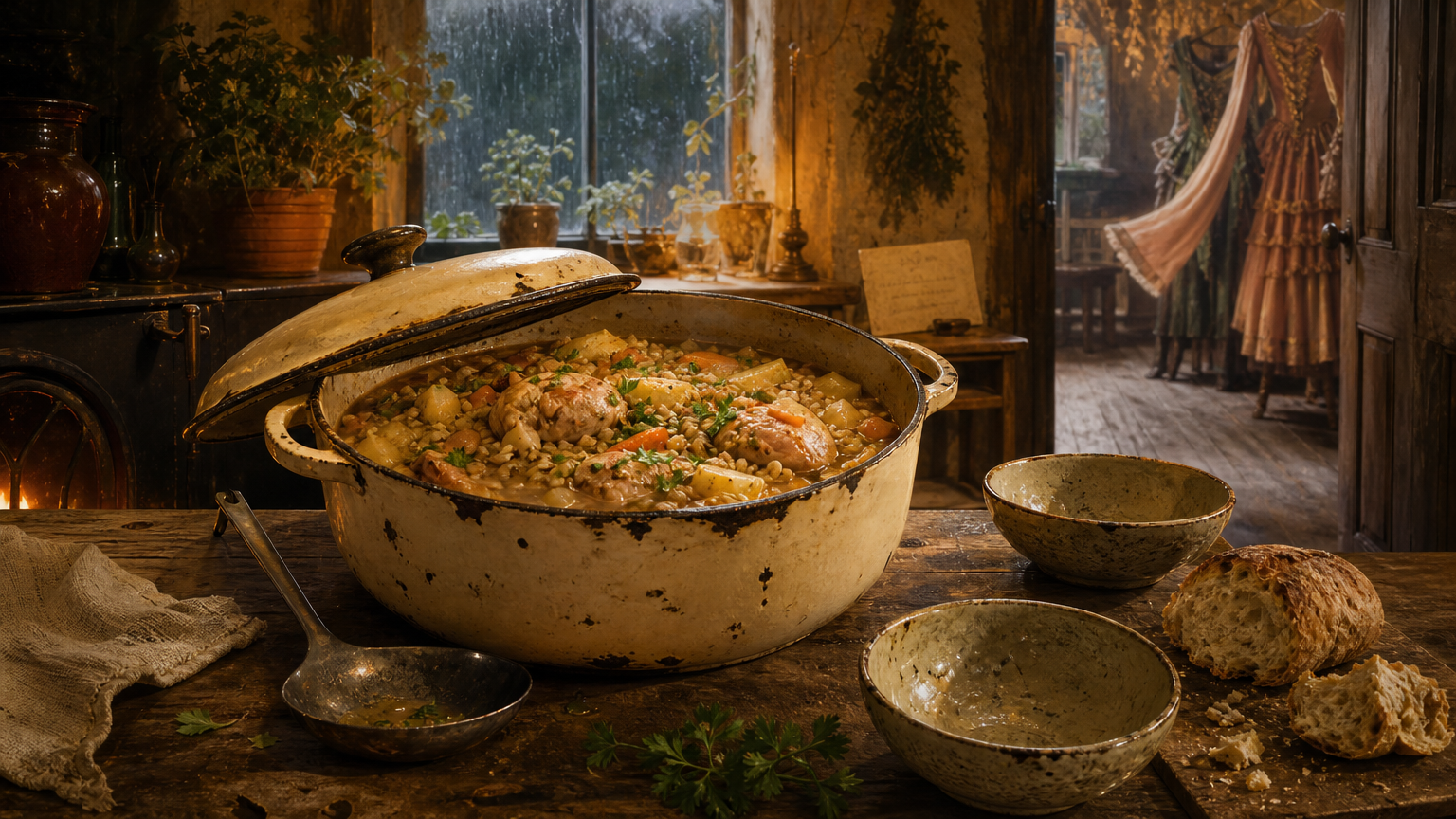
After-the-Show Chicken & Barley Stew
The rain had thinned to an occasional tap at the windows, and most of the attic things were still arranged around the cottage in various states of damp recovery.
A few old costume pieces hung in the adjoining room. Every time I passed the doorway, one sleeve shifted in the stove-warm air as if someone inside it had just changed their mind.
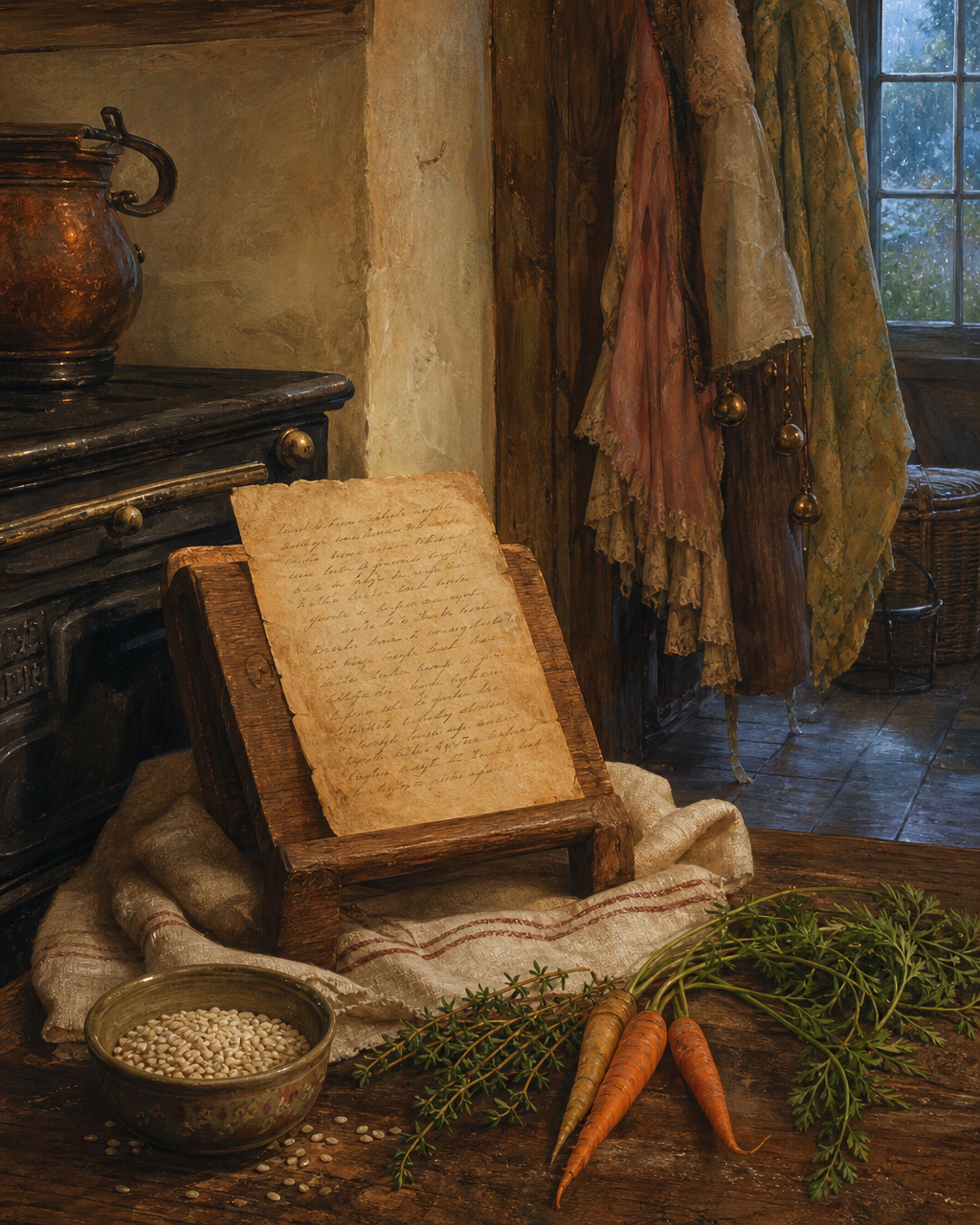
I found the cooking notes among the papers I had set safely away from the wet.
One pot.
Roots—whatever is good locally.
Enough broth to stretch.
Can wait if the final act runs long.
I knew the notes before I remembered the meal.
Then I could see it quite clearly: bowls lined along a folding table, someone removing stage paint with one hand while eating with the other, and little costume bells sounding whenever their wearer reached for more bread.
The stew needed to be patient. Performances did not always end when expected, particularly if the audience applauded too long or one of the actors discovered a fresh emotional interpretation halfway through the final scene.
Hungry performers are already dramatic. There is no reason to encourage them.
The root vegetables changed depending on where we were. Sometimes there were turnips. Sometimes an alarming quantity of carrots. For this version, I have settled on carrot, parsnip, and celery, which make a dependable pot and do not require consulting the local turnip situation.
The letter remains unresolved.
The recipe did not seem troubled by this. It was still useful, so I put the old notes beside the stove and began chopping.
After-the-Show Chicken & Barley Stew
Yield: About 6 servings
Preparation time: 20 minutes
Cooking time: 55 minutes
Ingredients
- 1½ pounds boneless, skinless chicken thighs, cut into 1½-inch pieces
- 1¼ teaspoons fine sea salt, divided, plus more to taste
- ½ teaspoon freshly ground black pepper, divided, plus more to taste
- 1 tablespoon cooking oil or butter
- 1 medium onion, diced
- 2 medium carrots, sliced
- 1 medium parsnip, peeled and diced
- 2 celery ribs, diced
- 3 garlic cloves, minced
- ¾ cup pearl barley, rinsed and drained
- 6 cups low-sodium chicken broth, plus more as needed
- 1 teaspoon dried thyme or 1 tablespoon fresh thyme leaves
- 1 bay leaf
- ¼ cup chopped fresh parsley, optional
- 1 tablespoon fresh lemon juice, optional
Instructions
-
Season the chicken.
Pat the chicken pieces dry. Season them with ¾ teaspoon of the salt and ¼ teaspoon of the black pepper. -
Brown the chicken.
Heat the oil or butter in a large, heavy pot over medium-high heat. Add the chicken in a single layer, working in two batches if necessary. Brown for 2 to 3 minutes per side. The chicken does not need to be cooked through yet. Transfer it to a plate. -
Soften the vegetables.
Reduce the heat to medium. Add the onion, carrots, parsnip, celery, and the remaining ½ teaspoon salt. Cook for 7 to 9 minutes, stirring occasionally, until the onion is soft and the vegetables have begun to take on a little color. -
Add the garlic.
Stir in the garlic and cook for about 30 seconds, just until fragrant. Garlic becomes bitter when scorched and will hold a grudge throughout the entire pot. -
Build the stew.
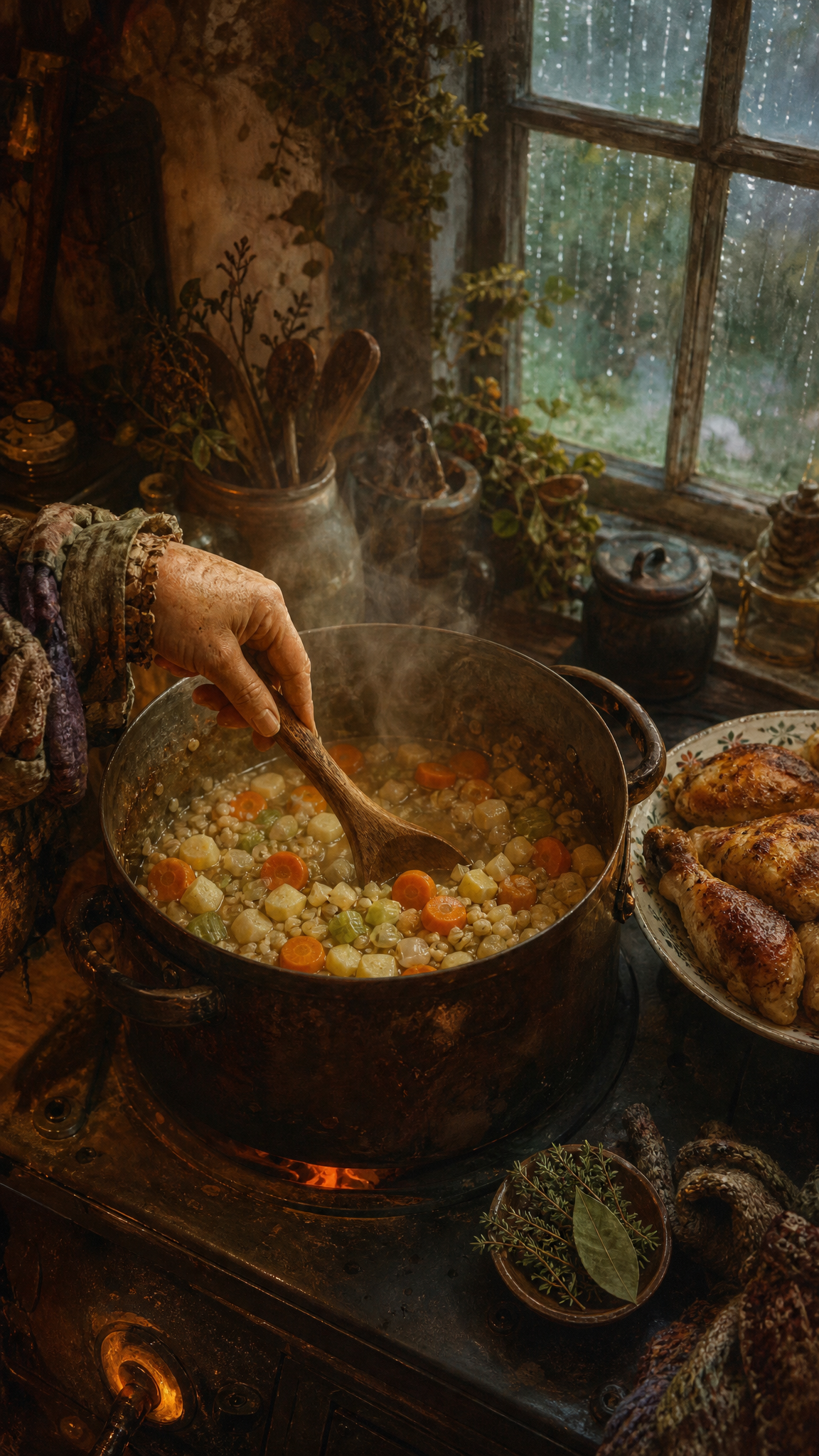
Add the pearl barley, 6 cups chicken broth, thyme, bay leaf, browned chicken, and any juices collected on the plate. Scrape the bottom of the pot to loosen the browned bits. -
Simmer gently.
Bring the stew just to a boil, then reduce the heat to maintain a gentle simmer. Partially cover the pot and cook for 35 to 45 minutes, stirring every 10 minutes or so to keep the barley from settling against the bottom. -
Check for doneness.
The stew is ready when the barley is tender with a slight chew and the vegetables can be easily pierced with a fork. Check a thick piece of chicken with an instant-read thermometer; it must reach 165°F (74°C). If the barley needs more time, continue simmering and add a little extra broth or water if the stew becomes too thick. -
Finish the stew.
Remove and discard the bay leaf. Stir in the remaining ¼ teaspoon black pepper. Taste and add more salt or pepper as needed. Let the stew rest for 5 minutes, then add another splash of broth if you prefer it looser. Finish with parsley, lemon juice, or both, if using.
Storage and Reheating
Let leftovers cool, then refrigerate them in an airtight container for up to 4 days.
Pearl barley continues absorbing broth while it rests, so the stew will become considerably thicker in the refrigerator. Add a generous splash of broth or water when reheating it gently on the stove or in the microwave.
The stew can also be frozen for up to 2 months. Thaw it overnight in the refrigerator and expect the barley to be softer after reheating.
By dusk, the windows had clouded with steam. The barley had thickened quietly in the pot, and the old recipe card stood propped beside the stove, safely beyond the reach of splashes.