The Moon on the Handbill
I recognized the moon before I recognized anything else.
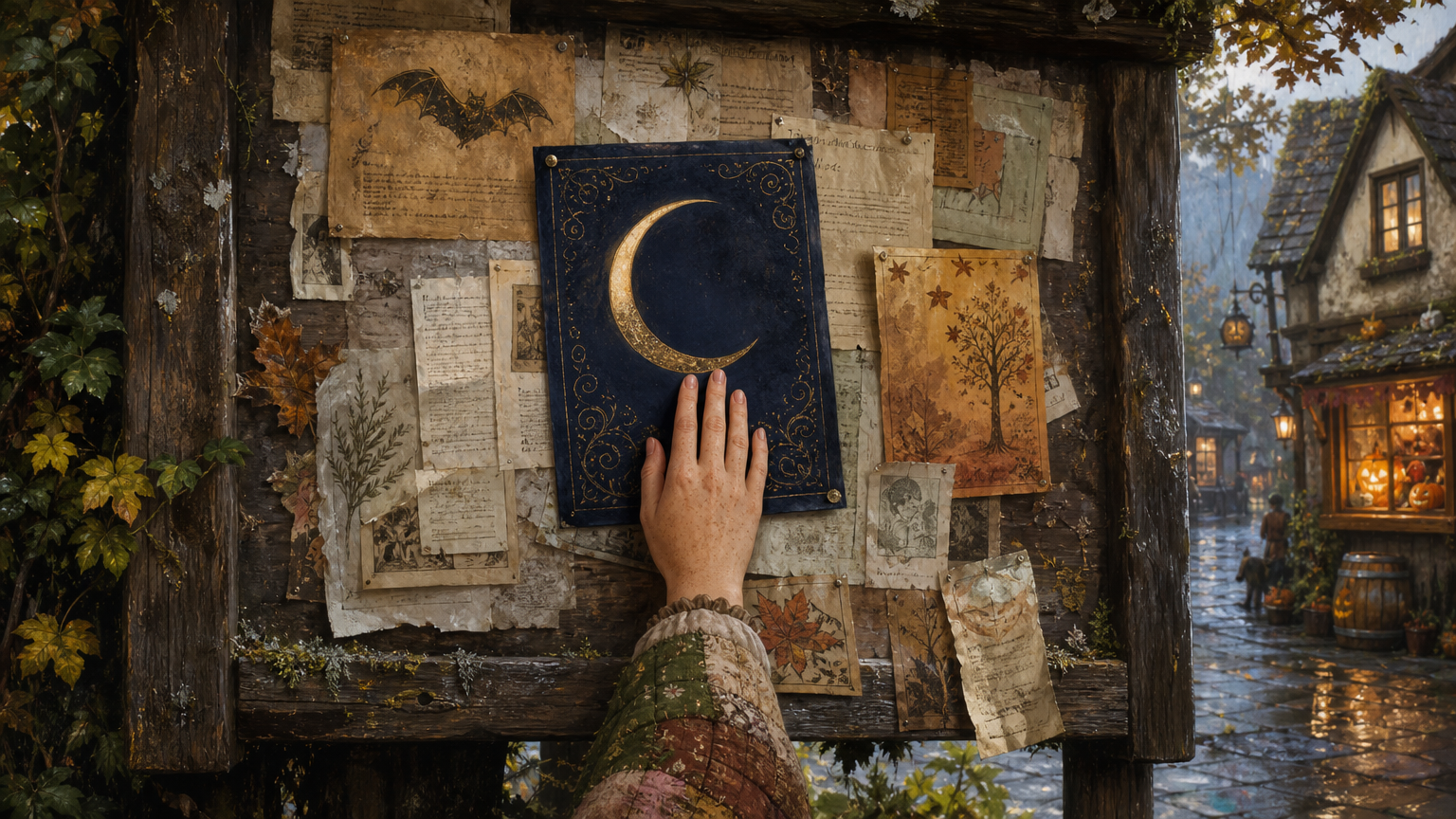
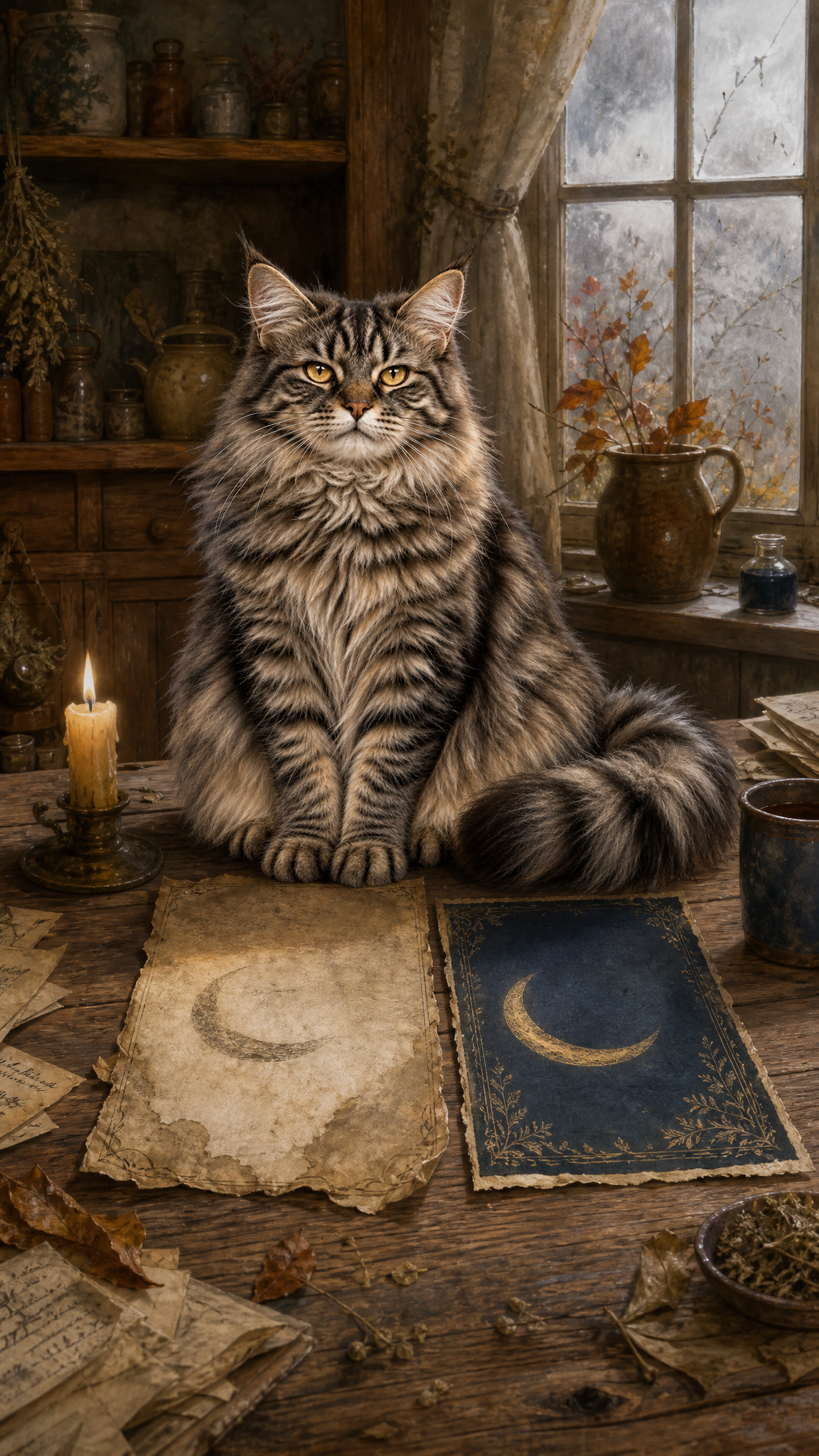
A painted crescent, pale gold against dark blue, with one tip slightly thicker than the other.
My hand had already come to rest beneath it before I understood why.
The village notice board was crowded from edge to edge. There were advertisements for chimney sweeping, winter apples, a missing glove, two separate offers of turnips, and a warning about leaving gates unlatched in windy weather. Someone had pinned a paper bat over the corner in honour of Halloween. It looked tired.
The moon was near the middle.
Below it, in the same curling letters I remembered, were the words:
ONE NIGHT ONLY
And beneath that:
WONDERS NEVER BEFORE WITNESSED BY MORTAL EYES
They have been promising this for years.
The lettering is still slightly crooked.
Around me, the village continued being Monday.
Someone came out of the bakery carrying two loaves beneath one arm. A pair of women paused beside the pump to discuss whether the cold would hold. A little boy pointed at the paper bat, which had begun to come loose on one side.
No one looked at the moon.
I read the handbill once.
Then again.
The troupe would perform nearby on Halloween night.
Saturday.
For a moment, the date seemed stranger than everything else on the page. My old life had previously existed in the useful, untidy category of before. Now it had a time and a place and instructions for purchasing admission.
The acts were listed in the same order.
Music. Marvels. Sleight of hand. Impossible feats. A grand spectacle following the interval.
Even the unnecessary flourish beneath the word grand remained.
But my name was gone.
I read the lower half a third time, more slowly, in case it had moved somewhere inconvenient.
It had not.
There was no line about fortunes before the curtain. No invitation to have one’s fate revealed beneath the painted moon. The space where it should have been was occupied by a larger promise regarding astonishment.
Astonishment has always required a surprising amount of advertising.
Someone brushed past me to pin up a notice about firewood.
“Sorry,” he said.
“It’s all right.”
I stepped aside. Then I stepped back again.
There were several small notices attached beneath the handbill, each repeating the date and place beneath a tiny painted crescent. I took one, folded it carefully, and put it into my satchel beside the roofing nails and the coil of twine I had come to buy.
I had forgotten the oilcloth.
I remembered halfway home, just after checking that the folded notice was still in my satchel.
I considered going back.
Then I checked for the notice again.
The oilcloth could wait.
At the cottage, the old handbill was still drying beside the rescued papers downstairs. Its edges had curled. Rain had blurred one corner into a soft brown tide mark, and the painted crescent had faded enough to look as though it were setting.
I put the new notice beside it.
The paper was crisp. The moon was brighter. The impossible wonders had not changed at all.
My name had.
Or rather, it had ceased to be there.
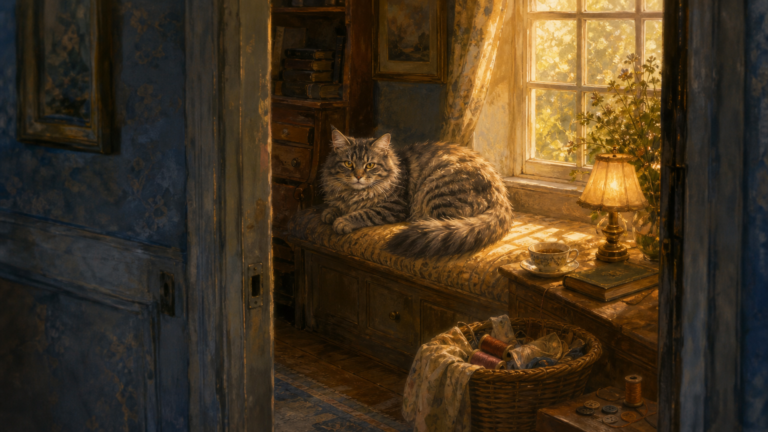
I stood looking at both of them until Smokey arrived and sat directly on the corner of the older paper.
I moved him.
He returned.
Apparently he had formed an opinion about archival methods.
I carried the new notice to the mantel, where it leaned against a candle for nearly ten minutes.
Then I decided it looked too deliberate there, so I moved it to the kitchen table.
That looked more deliberate.
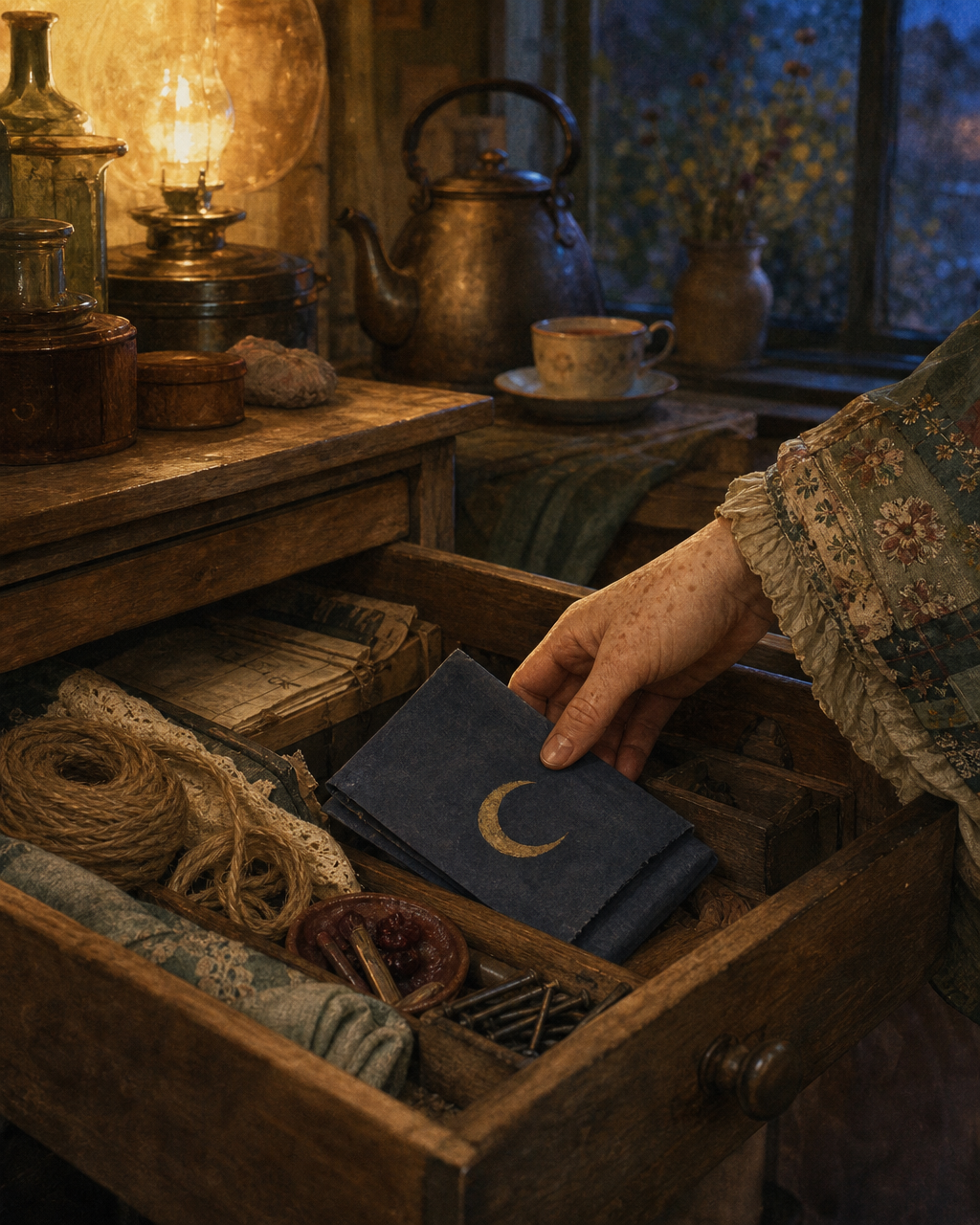
I folded it and put it into the drawer with the string, sealing wax, and things I do not currently know where else to keep.
A little later, while making tea, I found it beside the kettle.
I do not remember taking it out.
I put it back on the mantel.
By evening it was on the arm of my chair.
When I went upstairs, it was still in my hand.